The National Firearms Act is the oldest federal gun law still on the books. It was signed on June 26, 1934, and almost everything about it, from the items it covers to the $200 tax, comes straight out of the crime headlines of the early 1930s.
Prohibition and the gang wars
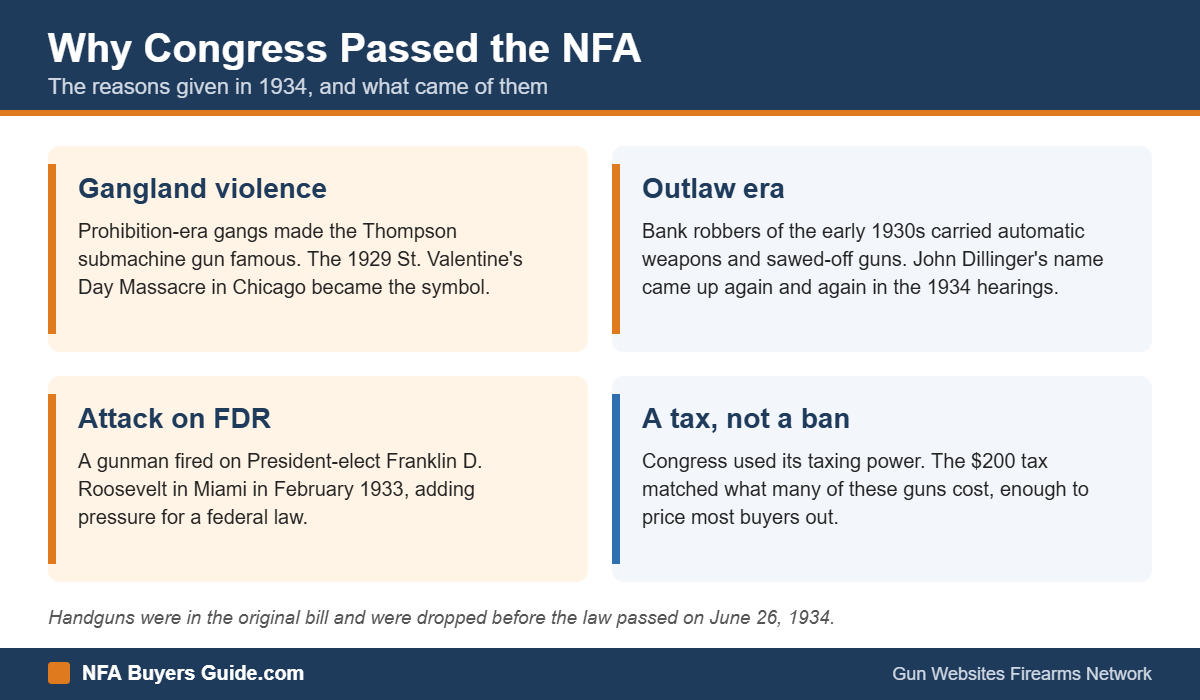
Prohibition turned beer and whiskey into a fortune for organized crime, and the gangs fought over it with the newest guns money could buy. The Thompson submachine gun became so tied to Chicago mobsters that it picked up the nickname “Chicago Typewriter.”
On February 14, 1929, seven men were lined up against a garage wall in Chicago and shot with Thompsons and shotguns. The St. Valentine’s Day Massacre shocked the country and became the symbol of the gangster gun problem.
The outlaw era
The early 1930s brought a wave of bank robbers who traveled by car and outgunned local police with automatic weapons and sawed-off shotguns. John Dillinger’s name came up again and again when Congress held hearings on the bill in the spring of 1934.
The attack on Roosevelt
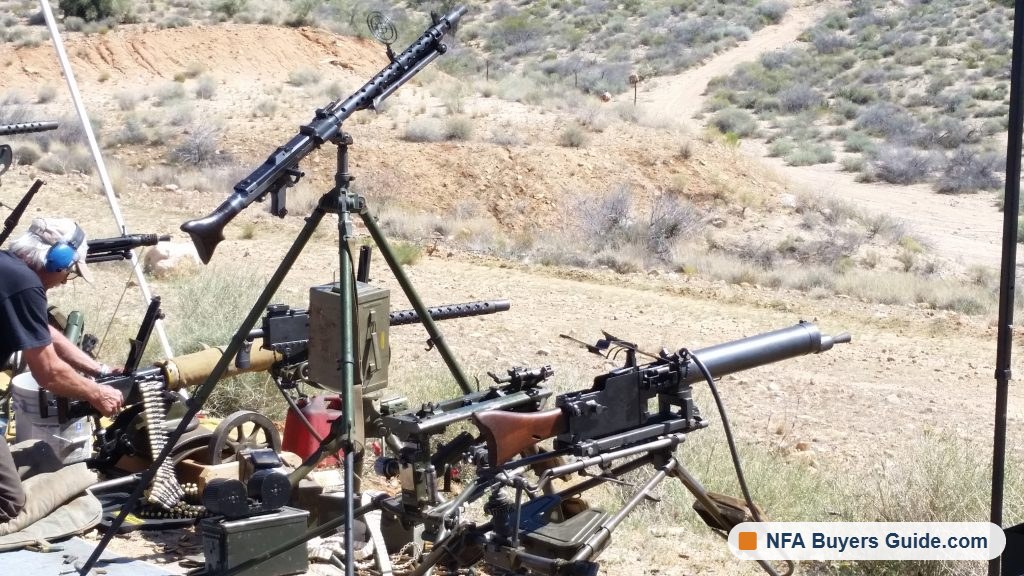
In February 1933, a gunman fired on President-elect Franklin D. Roosevelt in Miami. Roosevelt was not hit, but Chicago Mayor Anton Cermak was mortally wounded. The attack added pressure for a national gun law in the new administration.
Why a tax and not a ban
In 1934, Congress did not believe it had the power to simply ban guns, so it used the power it was sure of: taxation. The NFA put a $200 tax on making or transferring each covered firearm and a yearly occupational tax on the businesses that made and sold them. ATF itself describes the $200 tax as roughly what the guns cost at the time, set high enough to discourage sales.
Registration came along with the tax. If the government was going to collect $200 on each transfer, it needed to know where every taxed gun was. That registry, not the tax, is what gun owners lived with for the next ninety years.
What Congress left out
The original bill covered handguns too. Pistols and revolvers were dropped before the law passed, which is why the NFA ended up covering short rifles and shotguns, the kind of guns that could be hidden like a handgun, while leaving handguns themselves alone. That compromise explains the oddest rules in the law to this day.
A 1934 law in a 2026 world
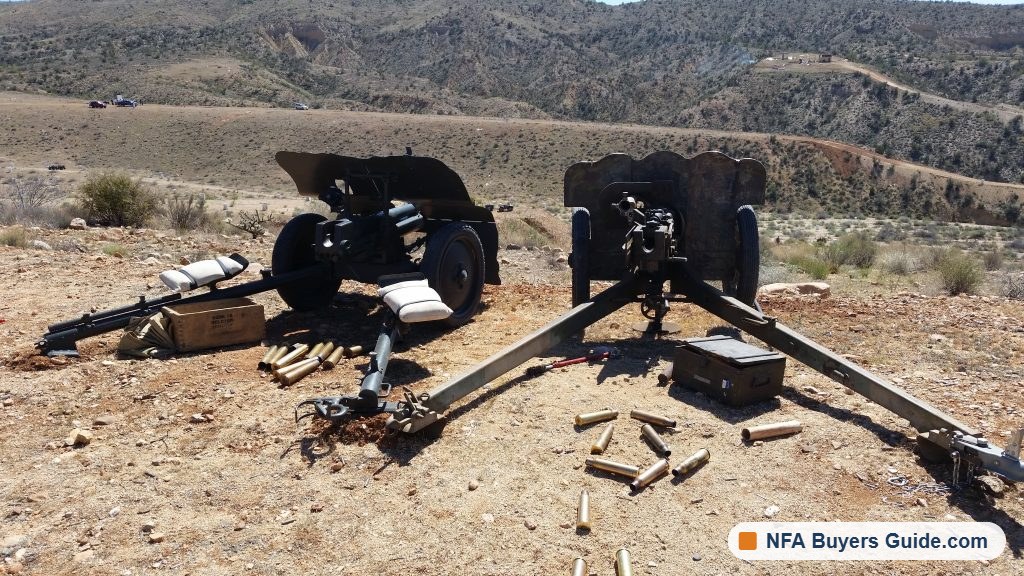
The gangs that inspired the NFA are long gone, and registered NFA items have a very low crime rate. When Congress cut the tax to $0 for suppressors, SBRs, SBSs and AOWs, it pulled out the very foundation the 1934 Congress built on. Courts noticed: in 2026 a federal court ruled that a $0 tax can no longer justify the registry for those items.