Machine guns are why the NFA exists. The Thompsons of the gangster era were the original target in 1934, and machine guns are still the most tightly controlled item a private citizen can own.
What counts as a machine gun
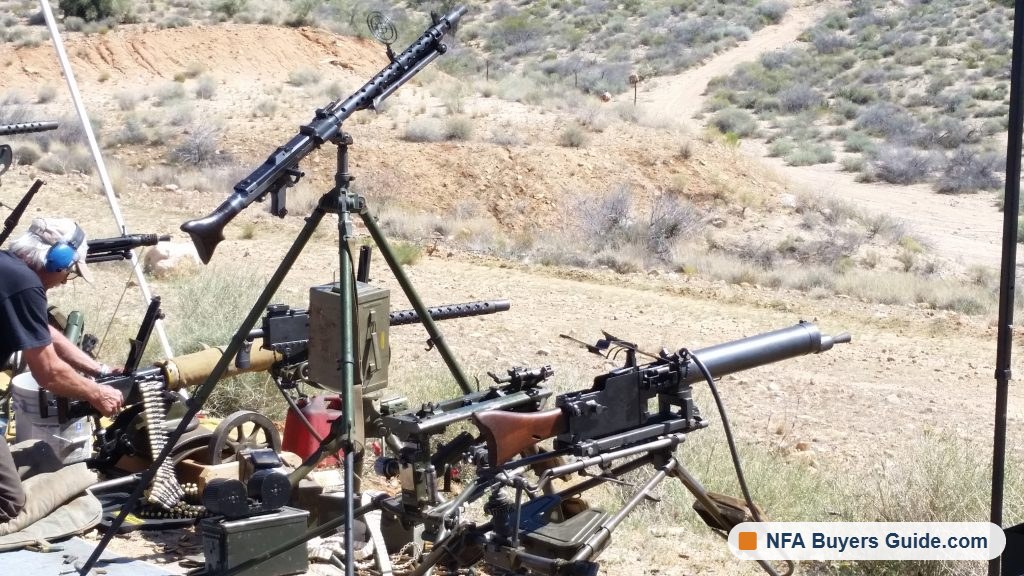
Federal law defines a machine gun as any weapon that fires more than one shot with a single function of the trigger. The definition also covers the frame or receiver, and any part or set of parts designed to convert a gun to full auto.
The 1986 freeze
The Hughes Amendment to the Firearm Owners Protection Act stopped new machine guns from being registered to private owners after May 19, 1986. Only guns already on the registry before that date can be bought and sold by civilians. With a fixed supply and steady demand, transferable machine guns often cost tens of thousands of dollars.
How to buy one
- Confirm your state allows machine gun ownership.
- Find a transferable gun through a dealer or a private owner in your state.
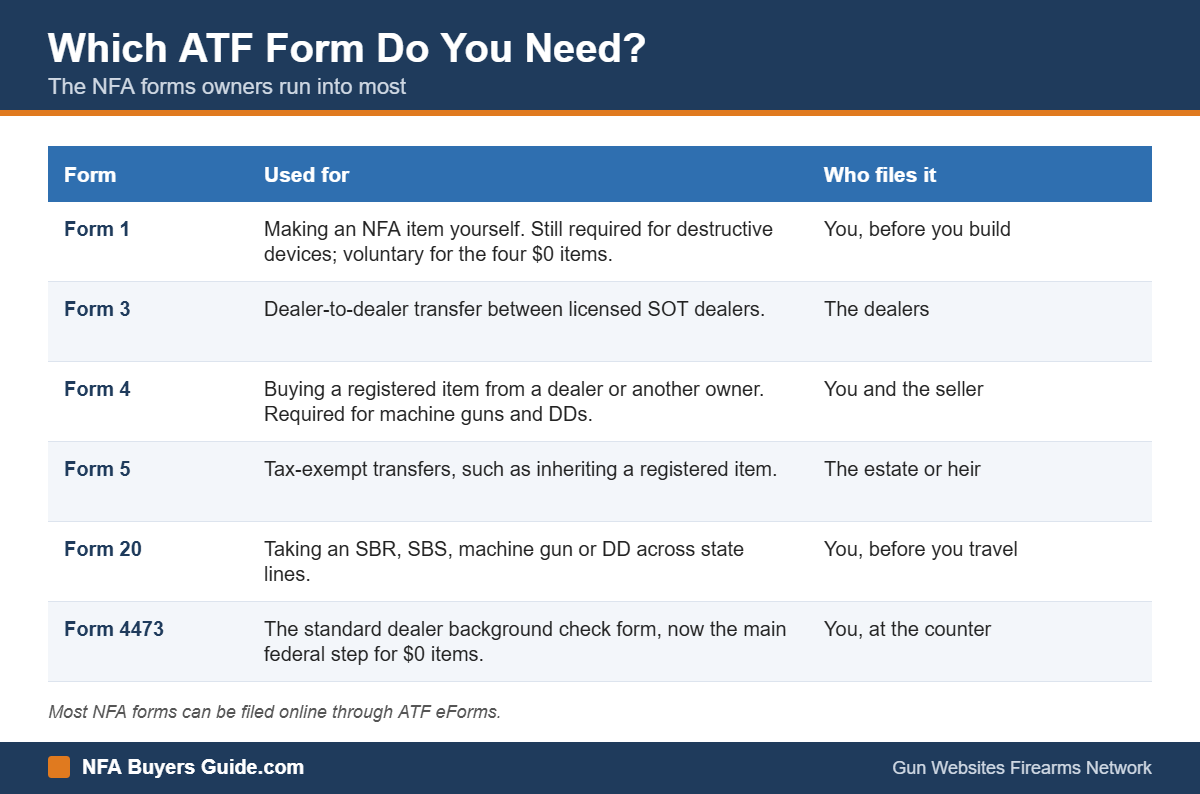
- File a Form 4 with fingerprints, a passport-style photo and the $200 tax.
- Send a copy to your chief law enforcement officer.
- Wait for ATF approval, then take possession.
Owning one
Keep your approved Form 4 with the gun, and file a Form 20 before taking it across state lines. The October 2026 policy change does not touch machine guns. Every NFA rule still applies.