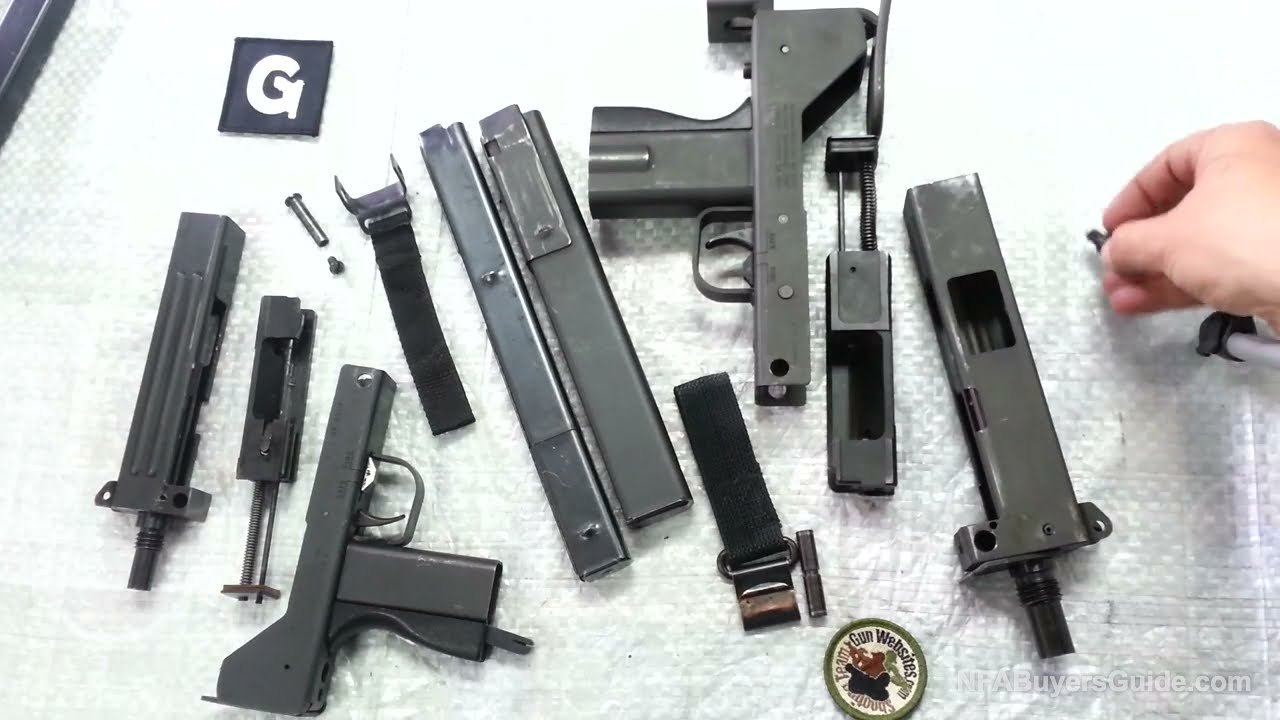
Same designer, same boxy look, very different guns in the hand.Here is how the MAC-10 and MAC-11 compare, and where they stand under the NFA in 2026.
MAC-10 vs MAC-11 at a glance
| MAC-10 (Model 10) | MAC-11 (Model 11) | |
|---|---|---|
| Calibers | .45 ACP or 9mm | .380 ACP |
| Size | Larger receiver | Scaled down |
| Weight (empty) | About 6 lb | About 3.5 lb |
| Rate of fire | About 1,100 rpm | Roughly 1,200+ rpm |
| Operation | Open bolt, blowback | Open bolt, blowback |
| Magazine | Grip-fed, double stack | Grip-fed, double stack |
| NFA status (full auto) | Machine gun, $200 | Machine gun, $200 |
Figures are approximate and vary by maker and configuration.
MAC-10 vs. MAC-11, pistol vs submachine gun: the full side-by-side
One designer, two sizes
Gordon Ingram designed the Model 10 in the 1960s. Military Armament Corporation (MAC) put it into production around 1970, which is where the name Mac comes from. The Model 11 followed as a smaller version built around the .380 ACP cartridge.
Both run from an open bolt with a simple blowback action, both feed through the pistol grip, and both were built to take a suppressor on a threaded barrel. Stamped steel and a short bolt travel are why they cycle so fast.
The M3 Grease Gun connection
If you came here looking for the M3 Grease Gun, there is a real link: the .45 ACP MAC-10 was designed to use magazines based on the M3 Grease Gun’s 30-round .45 magazine. The M3 itself is a different gun, with the magazine in front of the trigger guard and full-auto fire only. Like the MACs, a transferable M3 is a machine gun under the NFA.
What the October 9, 2026 change means for Macs
Full-auto Macs: no change
- Still machine guns under the NFA.
- $200 tax and an approved Form 4.
- Only guns registered before May 19, 1986 can go to civilians.
What did change nearby
- A suppressor for your Mac no longer needs federal approval or registration.
- Short-barreled carbine versions (SBRs) are in the same group.
- Your state may still say otherwise.
Read the full breakdown on The NFA in 2026: What Changed and What Did Not, and see Machine Guns for how the 1986 cutoff works. The 1986 vote itself is covered in the NFA Timeline.
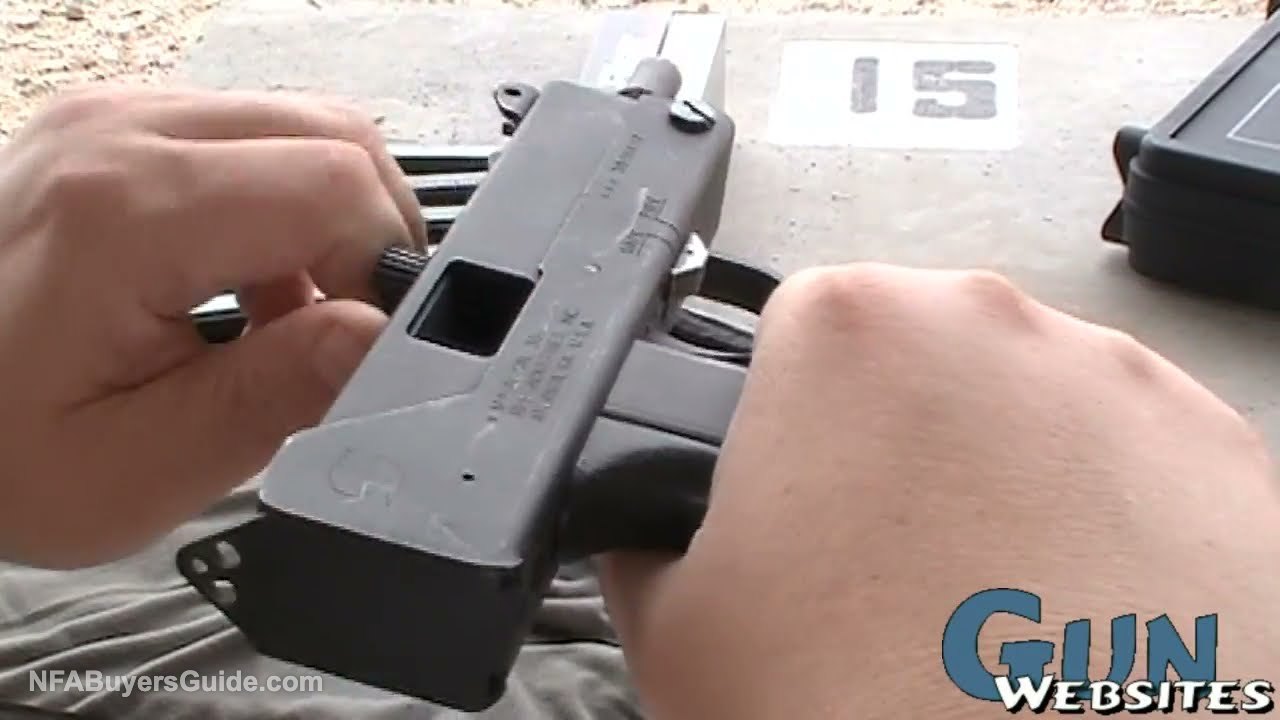
The open-bolt MAC-11 in .380 ACP
Open bolt, semi-auto and the 1982 line
Semi-auto open-bolt MAC pistols were sold in the late 1970s and early 1980s. In 1982, ATF Ruling 82-8 classified open-bolt semi-autos of this type made after June 21, 1982 as machine guns, because they could be converted too easily. Guns made before that date are generally treated as ordinary firearms, which is why a pre-1982 open-bolt MAC-11 is a collector favorite. Semi-auto MAC-style guns made later use a closed bolt.
An original MAC-10, full auto
Common questions
What is the difference between a MAC-10 and a MAC-11?
Size and caliber. The MAC-10 (Model 10) was built in .45 ACP and 9mm. The MAC-11 (Model 11) is a scaled-down version built for the shorter .380 ACP cartridge, so it is smaller, lighter and runs faster.
Is the MAC-11 the same as the M11/9?
Not exactly. The original Military Armament Corporation Model 11 is a .380 ACP gun. Later makers built a 9mm version on a longer receiver, sold as the M11/9, and many people call both of them a Mac 11.
Is a full-auto MAC-10 or MAC-11 still an NFA item?
Yes. Machine guns were not part of the October 9, 2026 change. A full-auto MAC still carries the $200 tax, needs an approved Form 4, and civilians can own only ones registered before May 19, 1986.
What about semi-auto open-bolt MAC pistols?
ATF Ruling 82-8 classified open-bolt semi-auto versions made after June 21, 1982 as machine guns, because they convert to full-auto too easily. Open-bolt guns made before that date are generally treated as ordinary firearms. Later semi-auto MAC-style guns fire from a closed bolt.
Why is it called a Mac?
MAC stands for Military Armament Corporation, the company that made Gordon Ingram’s designs starting around 1970. That is why you will also hear them called Ingrams.
Sources
- ATF Open Letter, October 9, 2026 (machine guns unchanged)
- 18 U.S.C. 922(o), machine gun possession after May 19, 1986
General information about firearms history and federal policy, not legal advice. Check your state and talk to a firearms attorney before buying or transferring an NFA item.